Embracing An Urban Food Sovereignty Starter Kit
The path to urban food sovereignty isn’t just about growing tomatoes in pots (though that’s a great start). It’s about fundamentally changing our relationship with food production and distribution while building resilient local food systems that serve community needs first. From apartment dwellers harvesting herbs on their windowsills to neighborhood cooperatives transforming vacant lots, urban food sovereignty is creating a powerful alternative to our corporate food system.
Key Takeaways: Urban Food Sovereignty
- Food sovereignty empowers urban residents to control their own food systems, reducing dependence on industrial supply chains and improving access to fresh, nutritious food.
- You don’t need a yard to grow food—containers, community gardens, and indoor systems can yield surprising amounts of produce even in limited spaces.
- Urban growing addresses food injustice in marginalized communities while building resilience against supply disruptions and price fluctuations.
- Starting with easy crops like herbs, leafy greens, and tomatoes provides quick success and builds confidence for urban growers.
- Growing your own food reconnects you with cultural food traditions and creates opportunities for community building through seed sharing and knowledge exchange.
The urban food sovereignty revolution is happening in windowsills, on rooftops, and in community plots across our cities. As grocery prices climb and food insecurity spreads, urban residents are reclaiming their right to fresh, affordable food through growing their own—regardless of space limitations.
What Urban Food Sovereignty Actually Means
Urban food sovereignty is about reclaiming control over how food is produced, distributed and consumed in city environments. Unlike conventional food systems where decisions are made by distant corporations, food sovereignty puts power back into the hands of individuals and communities. This concept was formally introduced by La Via Campesina, an international farmers’ movement, in 1996, but has roots in indigenous and traditional food practices that stretch back centuries.
At its core, food sovereignty goes beyond simply having enough to eat — it addresses who controls the food system and how that system operates. In urban environments, this means creating alternatives to supermarket dependence through growing food, establishing local markets, and building community-based food networks that prioritize the needs of residents rather than corporate profits.
Taking Control of Your Food from Seed to Plate
Food sovereignty begins with seeds. When you select, save, and share seeds, you’re taking the first step toward independence from industrial agriculture. Commercial seed stocks have declined dramatically over the past century, with just four companies controlling over 60% of the global seed market. By learning to save and exchange seeds, particularly heirloom and locally-adapted varieties, you preserve biodiversity and cultural food heritage while reducing dependence on commercial suppliers.
The journey continues with growing practices that respect natural cycles and avoid harmful chemicals. Whether you’re using organic methods in a community garden plot or hydroponics on your apartment balcony, sustainable growing techniques build healthier food systems. The final piece involves processing and preserving your harvest—transforming summer’s abundance into winter’s sustenance through freezing, canning, drying, or fermenting.
How City Living Affects Food Access and Quality
Urban environments present unique challenges for food access. Many city neighborhoods qualify as “food deserts” or “food apartheid areas”—terms that describe communities with limited access to affordable, nutritious food. These areas disproportionately affect low-income neighborhoods and communities of color, where residents may rely on convenience stores or fast food for their meals, leading to higher rates of diet-related health issues.
Even in neighborhoods with supermarkets, the quality and variety of produce can be limited and expensive. Fruits and vegetables in conventional grocery stores travel an average of 1,500 miles before reaching your plate, sacrificing nutrition and flavor for shelf life. Urban food sovereignty addresses these inequities by creating hyperlocal food sources that provide fresh, affordable alternatives while building community resilience.
The Difference Between Food Security and Food Sovereignty
“Food security is when people have access to food. Food sovereignty is when people have control over their food systems.” — Winona LaDuke, Indigenous environmentalist and economist
Food security focuses on ensuring everyone has enough to eat, while food sovereignty addresses the deeper question of who controls food systems. Traditional food security approaches might involve food banks or government assistance programs—essential services that nevertheless leave recipients dependent on others for their sustenance. Food sovereignty, by contrast, builds self-determination and community control over food resources.
In practice, this means moving beyond treating hunger as just a calorie deficit to addressing the systemic inequities in how food is produced and distributed. Urban food sovereignty empowers residents to grow food, support local producers, establish cooperative markets, and advocate for policies that democratize the food system. The goal isn’t just feeding people today, but creating lasting systems that nourish communities physically, culturally, and economically for generations to come.
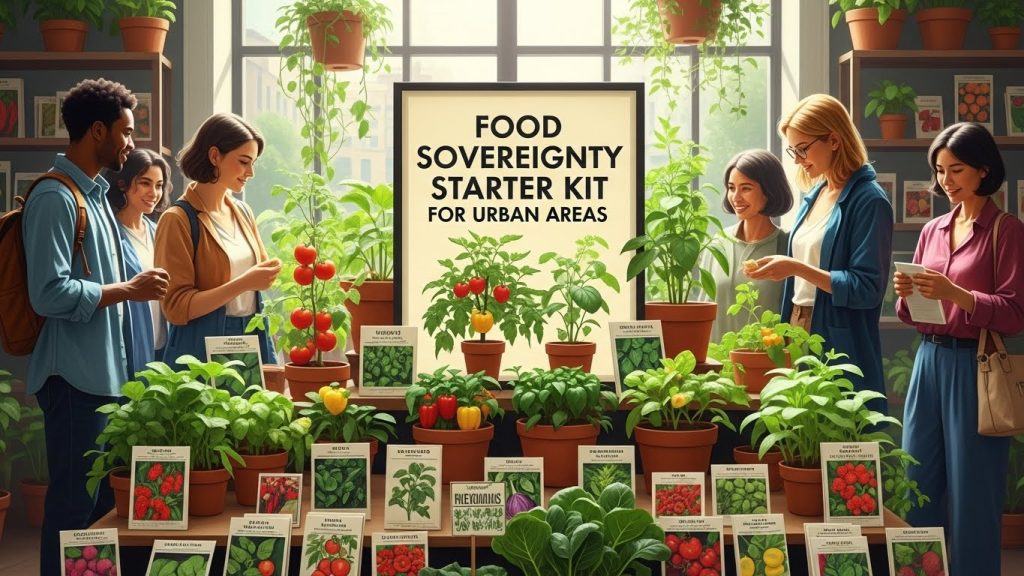
5 Powerful Benefits of Growing Your Own Food in the City
Urban agriculture doesn’t just produce food—it transforms relationships between people, communities, and natural systems. By growing even a small portion of your diet, you participate in a powerful act of reclaiming autonomy while enjoying numerous benefits that extend far beyond your dinner plate.
1. Fresh, Nutritious Food Without the Markup
Nothing compares to the flavor and nutrition of vegetables harvested minutes before eating. Store-bought produce loses up to 30% of its nutritional value within three days of harvest, while fruits and vegetables you grow maintain peak nutrition. A study in the Journal of Agricultural and Food Chemistry found that some home-grown vegetables contain up to 40% more phytochemicals than their commercial counterparts.
The financial benefits are equally impressive. A well-maintained 4×8-foot raised bed can produce up to $600 worth of vegetables annually in most climate zones. Even a modest windowsill herb garden saves $30-50 monthly for many urban cooks while providing fresher flavors than store-bought alternatives. As food prices continue rising faster than inflation, growing even a portion of your diet creates meaningful savings.
Window and Balcony Gardens That Actually Produce
Don’t underestimate what you can grow in a few containers on a window ledge or balcony. With proper planning, even tiny spaces can yield surprising amounts of food. A standard 3-foot balcony can accommodate 6-8 medium containers producing enough herbs and vegetables for regular harvests throughout the growing season. The key is maximizing vertical space with trellises, hanging planters, and stackable containers while choosing high-yielding compact varieties specifically bred for small spaces.
Strategic placement makes all the difference in productivity. Track sunlight patterns throughout the day and position sun-loving crops like tomatoes and peppers where they’ll receive at least 6 hours of direct light. Use shadier spots for leafy greens and herbs that tolerate less intense light. Self-watering containers and water reservoirs help maintain consistent moisture—critical for container gardens that dry out faster than in-ground beds. For apartment dwellers facing strict regulations, lightweight soil alternatives like coco coir mixed with compost reduce weight while providing excellent growing medium for most container crops.
Community Garden Opportunities in Urban Areas
Community gardens offer the perfect solution for apartment dwellers seeking more growing space while building neighborhood connections. Most urban areas have established community garden networks with plots available for reasonable annual fees (typically $25-75 depending on location and size). Beyond just providing land, these gardens often include shared infrastructure like water systems, tool libraries, and compost facilities that would be prohibitively expensive for individual growers. Organizations like the American Community Gardening Association maintain directories of local gardens, while many cities have dedicated programs connecting residents with available plots through parks departments or nonprofit partners.
Indoor Growing Systems for Year-Round Harvests
Indoor growing enables year-round production regardless of climate or outdoor space limitations. Modern LED grow lights have transformed indoor growing by providing full-spectrum light while using 75% less energy than older lighting systems. These efficient lights make it possible to grow food in any indoor space—from dedicated grow rooms to kitchen countertops. For beginners, self-contained hydroponic systems offer the simplest entry point, with all-in-one units starting around $100 that can produce weekly harvests of greens and herbs with minimal maintenance.
More ambitious indoor growers can explore vertical hydroponic systems that maximize production in small footprints. A four-tier vertical system occupying just 4 square feet can produce the equivalent of 16 square feet of garden space—enough to supply a household with continuous salad greens and herbs. Microgreen systems require even less space, with a single 10×20-inch tray producing nutritionally-dense greens every 7-10 days. When combined with proper temperature control and air circulation, these systems create ideal growing conditions that often exceed outdoor productivity while using 90% less water than conventional soil gardening.
Rooftop and Vertical Growing Solutions
Rooftops represent one of the most underutilized growing spaces in urban environments, with potential to transform barren heat-absorbing surfaces into productive food gardens. Successful rooftop gardens require careful planning for weight limitations (typically 10-30 pounds per square foot for extensive systems), wind exposure, and water management. Lightweight growing media using expanded clay pellets or recycled materials offer solutions for weight constraints, while modular green roof systems simplify installation and maintenance. For multi-unit buildings, coordinating with building management or forming tenant gardening committees helps navigate approval processes while sharing responsibilities for maintenance and harvesting.
6 Easiest Crops for Urban Food Sovereignty
Starting with the right crops dramatically increases success rates for new urban growers. The most rewarding varieties thrive in containers, mature quickly, and provide multiple harvests from minimal space. Focus initially on high-value crops that are expensive to purchase but easy to grow, delivering the greatest return on your investment of time and resources.
The crops listed below were selected based on their adaptability to urban growing conditions, space efficiency, and productivity. Each requires minimal specialized equipment and tolerates the variable conditions common in city environments. Many can be grown concurrently in the same containers through companion planting or succession planting techniques that maximize yields from limited space.
Consider your available growing conditions—light levels, temperature ranges, and space constraints—when selecting from these options. Even with just a few hours of direct sunlight, you can successfully grow several varieties from this list. For extremely light-limited situations, focus on leafy greens and herbs that tolerate lower light conditions or consider supplementing with inexpensive LED grow lights that consume minimal electricity.
1. Leafy Greens for Continuous Harvesting
Leafy greens offer the fastest path to harvests for urban growers, with many varieties ready to pick within 30 days of planting. Using the “cut-and-come-again” method, where you harvest outer leaves while leaving the growing center intact, a single planting of greens like kale, Swiss chard, or leaf lettuce continues producing for months. These crops thrive in partial shade, making them perfect for east or west-facing windows and balconies that receive morning or afternoon sun.
For container growing, choose loose-leaf varieties rather than heading types (like iceberg lettuce) as they produce more efficiently in small spaces. Asian greens like bok choy, tatsoi, and mizuna grow particularly well in urban conditions, tolerating temperature fluctuations while providing distinctive flavors rarely found in supermarket produce. Most leafy greens perform exceptionally well in even shallow containers (6 inches deep), allowing you to grow them in repurposed household containers like plastic storage bins or dish tubs with drainage holes added. For more information on sustainable practices, check out this food sovereignty toolkit.
Success tip: Extend your lettuce growing season by selecting heat-tolerant varieties like ‘Nevada’ or ‘Jericho’ for summer growing, then switching to cold-hardy types like ‘Winter Density’ or ‘Arctic King’ for fall and winter harvests. With succession planting every 2-3 weeks, you can maintain continuous production nearly year-round in many climate zones, particularly when using simple season extension techniques like row covers or cold frames.
2. Fresh Herbs That Thrive in Containers
Herbs deliver exceptional value for urban growers, with a single windowsill planter producing enough to replace $5-10 weekly purchases of fresh herbs. Most culinary herbs evolved in Mediterranean climates, making them naturally drought-tolerant and well-adapted to container growing. Basil, cilantro, parsley, mint, rosemary, thyme, and chives all thrive in 6-8 inch pots on sunny windowsills or under basic grow lights. Perennial herbs like rosemary, thyme, and sage continue producing for years with minimal care, while fast-growing annuals like basil and cilantro can be succession-planted every few weeks for continuous harvests.
3. Tomatoes and Peppers for Small Spaces
Compact determinate tomato varieties and dwarf pepper plants produce impressive harvests in containers as small as 5 gallons. ‘Tiny Tim,’ ‘Patio Princess,’ and ‘Tumbling Tom’ tomatoes mature at just 12-24 inches tall while yielding full-sized fruits. Similarly, compact pepper varieties like ‘Redskin,’ ‘Cajun Belle,’ and ‘Pretty N Sweet’ produce abundantly in small footprints. These fruiting crops require at least 6-8 hours of direct sunlight, so position them in your brightest growing areas and use reflective materials like aluminum foil or white cardboard behind plants to increase light exposure in less-than-ideal conditions.
4. Quick-Growing Root Vegetables
Root crops like radishes, baby carrots, turnips, and beets thrive in containers at least 8-12 inches deep. Radishes mature in just 21-30 days, making them perfect for impatient gardeners and intercropping between slower-growing vegetables. Baby carrot varieties like ‘Romeo’ and ‘Paris Market’ mature at just 3-4 inches long, perfect for shallow containers. When growing root vegetables in containers, lightweight soil mixes containing coconut coir or vermiculite create the loose, well-draining environment these crops need to develop properly without the compaction that often occurs in heavy urban soils.
5. Sprouts and Microgreens Without Soil
For the ultimate space-efficient crop, nothing beats sprouts and microgreens that can be grown without soil in any kitchen. Sprouts like mung beans, lentils, and broccoli require only a jar, some cheesecloth, and daily rinsing to produce nutritionally-dense food in 3-7 days. Microgreens take slightly longer (7-14 days) but offer intense flavors and exceptional nutritional profiles—often containing 4-40 times the nutrients of their mature counterparts.
The simplest microgreen setup requires only a shallow container, growing medium (coconut coir or special microgreen pads), and seeds. A standard 10×20-inch tray produces 4-8 ounces of microgreens weekly—enough to add significant nutrition to daily meals. Popular varieties include sunflower, pea shoots, radish, and buckwheat, each offering distinct flavors and textures that elevate everyday dishes from salads to sandwiches while providing concentrated nutrition.
6. Edible Flowers for Beauty and Nutrition
Edible flowers serve dual purposes in urban gardens—providing visual beauty while contributing to your food sovereignty. Nasturtiums, calendula, borage, and pansies all produce edible blooms while attracting beneficial insects. Nasturtiums offer exceptional value, with both leaves and flowers being edible with a peppery flavor similar to arugula. These low-maintenance plants thrive in poor soil conditions common in urban environments and cascade beautifully from hanging baskets or window boxes.
Beyond their culinary uses in salads and as garnishes, many edible flowers offer medicinal properties. Calendula (pot marigold) provides anti-inflammatory compounds used in salves and teas, while borage contains gamma-linolenic acid that supports skin health. These multi-functional plants maximize the return on your growing space while adding color and interest to container gardens that might otherwise focus solely on vegetables.
Building Urban Food Sovereignty Beyond Your Home
- Establish neighborhood seed libraries where residents can freely exchange open-pollinated and heirloom seeds
- Organize skill-sharing workshops teaching preservation techniques like canning, fermentation, and dehydrating
- Create buying clubs to purchase bulk foods directly from regional farmers at wholesale prices
- Map publicly accessible fruit trees and edible landscapes in your community using tools like Falling Fruit
- Support local food policy councils addressing urban agriculture zoning and community food security
- Participate in mutual aid networks distributing surplus harvests to neighbors in need
Personal food production is just one aspect of true food sovereignty. Building resilient local food systems requires collective action beyond individual gardens. Community-based initiatives like neighborhood fruit gleaning projects, cooperative buying clubs, and shared processing facilities extend the impact of urban agriculture while creating stronger social connections. Organizations like Urban Sustainability Alliance provide frameworks and resources for developing these community-scale projects that transform fragmented individual efforts into cohesive local food systems.
Successful community food projects begin by identifying existing assets and gaps in your local food system. Map out who’s already growing food, where processing and storage facilities exist, and which populations lack access to fresh produce. This assessment reveals the most strategic opportunities for intervention—whether that’s establishing a new community garden in a food desert, creating a tool-sharing library, or organizing community cooking classes that build skills for utilizing seasonal harvests.
Creating Seed Libraries and Exchanges
Seed sovereignty forms the foundation of food independence. Community seed libraries preserve locally-adapted varieties while reducing dependence on commercial seed companies. Starting a neighborhood seed library requires minimal infrastructure—often just a repurposed card catalog or cabinet located in a community center, public library, or local business. Seeds are labeled, categorized by type, and made available for community members to “borrow” with the understanding that they’ll save and return seeds from their harvest. The Richmond Grows Seed Lending Library offers free templates and guides for establishing community seed libraries that comply with seed laws while building local seed security.
Community Kitchens and Food Preservation
Shared processing facilities extend seasonal abundance throughout the year. Community kitchens—commercial-grade facilities available for public use—provide equipment and space for canning, dehydrating, freezing, and fermenting that might be impractical in small urban homes. These spaces often operate on membership models or hourly rental rates, making preservation equipment accessible to those without resources to purchase their own.
Beyond infrastructure, community preservation projects build crucial knowledge networks. Preservation skills traditionally passed through generations have been lost in many families, creating barriers to food sovereignty. Group preservation sessions where experienced canners and fermenters work alongside beginners rebuild these knowledge systems while processing larger quantities efficiently. The Sustainable Economies Law Center offers legal templates for establishing community kitchens that navigate health department regulations while maximizing accessibility.
Local Food Policy Advocacy
Policy barriers often present the greatest challenges to urban food sovereignty. Outdated zoning codes may prohibit front-yard gardens, chicken-keeping, or food sales from home kitchens. Engaging with local government through food policy councils and targeted advocacy campaigns can transform these barriers into supportive frameworks for urban agriculture. Successful policy initiatives in cities like Baltimore, Detroit, and Seattle have created comprehensive urban agriculture zoning designations, simplified permitting for community gardens, and established legal frameworks for cottage food businesses that allow home producers to sell certain low-risk foods directly to consumers.
Overcoming Common Urban Growing Challenges
Urban environments present unique challenges for food growers, from pollution concerns to limited light and restrictive housing policies. Rather than viewing these as insurmountable obstacles, successful urban food sovereignty practitioners develop creative adaptations. Contaminated soil can be addressed through raised beds with imported clean soil or container growing, while light limitations can be overcome through reflective surfaces, strategic plant selection, and supplemental lighting. Organizations like Growing Justice provide resources specifically addressing urban growing challenges for communities facing multiple barriers to food production, including multilingual guides and culturally-relevant growing information for diverse urban populations.
Limited Sunlight Solutions
Most urban growing spaces receive significantly less light than ideal growing conditions due to surrounding buildings, trees, and orientation. For areas with just 3-4 hours of direct sunlight, focus on leafy greens, herbs, and root vegetables that can thrive with less intense light. Install reflective surfaces like white-painted walls, aluminum foil, or specialized reflective garden fabric to maximize available light by bouncing it onto plants from multiple directions. This simple technique can increase effective light exposure by up to 30% in many urban settings.
Space Constraints and Creative Workarounds
The vertical dimension is your greatest ally in limited urban spaces. Stackable growing systems, wall-mounted planters, and hanging gardens can multiply your growing area without increasing your footprint. Vertical growing systems like garden towers can accommodate 50+ plants in just 4 square feet, while green walls transform unused vertical surfaces into productive growing space. Trellising indeterminate crops like cucumbers, beans, and vining tomatoes lets them grow upward rather than sprawling, often tripling yields from the same square footage.
Multi-function containers maximize space efficiency by serving several purposes simultaneously. Tomato plants, for instance, can be underplanted with shallow-rooted herbs and lettuces that thrive in the dappled shade and use different soil layers. This guild planting approach mimics natural systems while providing multiple harvests from a single container. Similarly, edible landscaping applies permaculture principles to ornamental spaces, incorporating beautiful food plants like rainbow chard, purple basil, and edible flowers into existing landscape areas rather than creating separate vegetable gardens.
Dealing with City Pollution
Urban air pollution deposits particulates on plant surfaces, while soil may contain historical contamination from industry, lead paint, or vehicle emissions. Address these concerns by thoroughly washing all produce before consumption and implementing physical barriers when necessary. For areas with heavy air pollution, consider growing in partially enclosed spaces like balconies with overhead protection, or using row covers that allow light and water through while filtering some airborne particles.
For soil concerns, raised beds with imported clean soil eliminate contact with potentially contaminated ground soil. The minimum recommended depth is 12 inches with landscape fabric underneath to prevent root penetration into native soil. In areas with known heavy metal contamination, focus on fruiting crops (tomatoes, peppers, cucumbers, beans) rather than root vegetables or leafy greens, as they typically transfer fewer contaminants from soil to edible portions. Organizations like the Urban Soils Institute provide affordable soil testing services specifically designed for urban gardeners, with guidance on interpreting results and implementing appropriate growing strategies based on contamination levels.
Navigating Apartment and HOA Restrictions
Many urban dwellers face restrictions from lease agreements, homeowners associations, or building policies that limit food growing. Review your lease or HOA covenants carefully—many restrictions focus on aesthetics rather than the plants themselves. Present well-designed container gardens that enhance rather than detract from property appearance, using decorative pots and maintaining tidy growing areas. For restrictive environments, indoor growing systems, disguised edible landscaping, and community garden participation offer alternatives that bypass limitations while still building food sovereignty. Some cities have enacted “right to garden” ordinances that override certain HOA restrictions on food growing, providing legal protection for urban agriculture when framed as sustainability practices.
Make Your Urban Food Sovereignty Sustainable
True food sovereignty requires closed-loop systems that minimize external inputs while maximizing productivity. Urban growing often depends on purchased soil, fertilizers, and water—creating financial and resource dependencies that undermine self-sufficiency. Building systems that capture and recycle resources transforms this dynamic, creating truly sustainable urban food sovereignty production that functions independently even during supply chain disruptions or economic challenges. For more insights, explore the Reimagining Food Justice Toolkit.
The most resilient urban food sovereignty systems incorporate regenerative practices that improve growing conditions over time. Building soil health through composting and mulching reduces the need for purchased amendments, while water harvesting systems capture rainfall for irrigation use. Seed saving completes this loop, providing genetic material for future plantings adapted to your specific microclimate. These practices not only reduce dependency on external inputs but often improve yields while decreasing labor requirements as systems mature and ecological balance develops.
Composting in Small Spaces
Composting transforms food scraps and yard waste into valuable growing medium while diverting materials from landfills. For apartment dwellers, bokashi fermentation systems process food waste (including meat and dairy) in sealed buckets using beneficial microorganisms. These anaerobic systems prevent odors while breaking down materials in just 2-4 weeks, producing a fermented pre-compost that can be buried in container soil or further composted. The liquid byproduct makes an excellent fertilizer when diluted, providing micronutrients for container plants.
Vermicomposting (worm composting) offers another apartment-friendly option, with systems as small as shoebox-sized bins processing several pounds of vegetable scraps weekly. Red wiggler worms convert food scraps into nutrient-rich castings considered the “gold standard” of organic fertilizers. These systems operate without odor when properly maintained and can be kept under kitchen sinks, in closets, or on balconies in most climate zones. The resulting worm castings contain beneficial microbes that improve soil structure while slowly releasing nutrients in forms readily available to plants.
For those with more space, traditional composting in tumbling bins or three-bin systems processes larger volumes of organic material. Adding biochar (a form of charcoal made from woody materials) to compost increases its nutrient retention capabilities while sequestering carbon. Whatever method you choose, home composting closes the nutrient loop in your personal food system while providing growing medium that outperforms commercial alternatives in most applications.
Water Conservation Techniques
Water access and conservation represent critical components of sustainable urban food sovereignty production. Rain barrels connected to downspouts can capture significant water—a 1,000 square foot roof generates approximately 600 gallons of water from just one inch of rainfall. This harvested water, free from chlorine and other municipal water treatments, provides ideal irrigation for food plants. Simple filtration systems using screens and first-flush diverters remove debris and initial contaminants, making rooftop water suitable for vegetable irrigation in most areas.
For container gardens, self-watering systems dramatically reduce water requirements while improving plant health through consistent moisture. Commercial self-watering containers incorporate reservoirs that hold several days’ worth of water, while DIY versions can be created from nested buckets or bottles with wicking mechanisms. Ollas—unglazed clay pots buried in garden beds and filled with water—provide subsurface irrigation that reduces evaporation losses by up to 70% compared to surface watering. These ancient technologies deliver water directly to root zones while encouraging deeper root development that improves drought resistance.
Season Extension Methods for Year-Round Production
Extend your growing season through simple protection methods that create microclimates for plants. Cold frames (essentially mini-greenhouses) constructed from repurposed windows or plastic sheeting over frames can extend growing seasons by 1-2 months on either end while protecting cool-season crops throughout winter in many climate zones. Row covers made from floating fabric provide 2-8°F of frost protection while allowing light and water to penetrate, extending harvests of hardy greens like kale and spinach well into winter. For indoor growing spaces, simple heat mats under seedling trays provide bottom warmth that accelerates germination and early growth, allowing you to start summer crops weeks earlier than outdoor planting dates while extending fall production of heat-loving crops like peppers and eggplants.
Your Next Steps Toward Food Independence
Building food sovereignty is a journey rather than a destination. Begin with a single container of herbs or greens, then expand as your confidence and skills grow. Connect with local urban agriculture organizations, community gardens, and food sovereignty groups that provide resources, knowledge sharing, and community support. Document your growing experiences through photos and notes that help you refine techniques for your specific conditions. Most importantly, share your harvests, knowledge, and seeds with neighbors and family, expanding the impact of your individual efforts into broader community food resilience. Remember that every seed planted and skill developed builds not just personal food security but contributes to transforming our food system from the ground up.
Frequently Asked Questions About Urban Food Sovereignty
Urban food sovereignty practitioners share many common questions as they navigate the unique challenges of city growing. The answers below address the most frequently asked concerns based on practical experience from successful urban growers across diverse settings. These solutions have been tested in real-world conditions from apartment balconies to community gardens, providing proven approaches for common obstacles.
While your specific situation may require adaptations to these general guidelines, the principles remain consistent across urban environments. Start with these foundational approaches, then adjust based on your observations of what works in your unique microclimate and growing conditions. The most successful urban growers maintain flexibility and willingness to experiment while building on established techniques refined by the broader urban agriculture community.
How much money can I save by growing my own food in the city?
Financial returns vary widely depending on growing space, crop selection, and gardening methods. High-value crops like herbs, leafy greens, and tomatoes deliver the greatest savings. A typical 4×8 foot raised bed produces $600-1,000 worth of vegetables annually when properly managed, while even a modest windowsill herb garden saves $20-40 monthly compared to purchasing equivalent fresh herbs. Container gardens on a standard apartment balcony (6×10 feet) typically yield $300-500 in produce during a growing season in temperate climates.
Maximize financial returns by focusing on crops that are expensive to purchase but easy to grow. Herbs offer exceptional value—a single basil plant producing $15-20 worth of leaves over its lifetime from a $3 investment. Similarly, specialty greens like arugula and mesclun mixes cost $5-8 per pound in stores but grow easily in containers with seeds costing pennies. Track your harvests by weight compared to store prices to calculate your actual savings, adjusting your planting choices to emphasize crops that provide the greatest return on your specific growing conditions.
Do I need special permission to grow food on my balcony or in my apartment?
Most residential leases don’t specifically prohibit container gardening, but they often include clauses about maintaining appearances and preventing water damage. Review your lease for specific restrictions, and consider using saucers under containers, moisture barriers for indoor growing, and decorative containers that enhance rather than detract from property appearance. If concerned, have a conversation with your property manager or landlord, emphasizing the non-damaging nature of your planned garden and offering to provide additional protection like waterproof mats under containers. Many property managers approve container gardening when approached with well-considered plans that address potential concerns before they arise.
What are the best crops to grow if I only have 2-3 hours of sunlight per day?
In low-light conditions, focus on leafy vegetables and herbs that can produce with minimal sun exposure. Lettuces, arugula, spinach, kale, mint, parsley, and chives all perform reasonably well with just 2-3 hours of direct sunlight or bright indirect light throughout the day. Asian greens like bok choy and tatsoi are particularly shade-tolerant while providing excellent nutritional value. Root crops like radishes and baby carrots can produce smaller but still worthwhile harvests in partial shade.
Supplement limited natural light with inexpensive LED grow lights to dramatically increase growing options. Modern LED technology provides specific light spectrums optimized for plant growth while consuming minimal electricity. A simple 45-watt LED grow light running 12 hours daily adds approximately $2-3 to monthly electricity bills while enabling successful growth of most vegetables, effectively transforming any indoor space into a productive growing area regardless of natural light conditions.
How do I test urban soil for safety before growing food?
Professional soil testing through university extension services or specialized environmental labs provides comprehensive analysis of potential contaminants and nutrients. Basic tests typically cost $30-50 and screen for common urban contaminants like lead, arsenic, and petroleum compounds along with pH and nutrient levels. When sampling, collect small amounts from multiple locations and depths in your growing area, combining them for a representative composite sample. Organizations like the Urban Soils Institute and many university extension offices provide detailed instructions for proper sampling techniques and offer guidance for interpreting results, including threshold levels and recommended actions for various contaminant concentrations.
Can I really grow enough food to make a difference in my food budget?
Even small growing spaces can significantly impact your food budget when managed intensively. Just 1-2 hours of gardening weekly can produce 15-20% of a person’s vegetable needs in a balcony garden, while dedicated urban gardeners with larger spaces often produce 50-80% of their household’s produce during peak growing seasons. The key is continuous planting and harvesting, with new crops started as space becomes available and intensive techniques like vertical growing and intercropping that maximize productivity from limited areas.
Learning to process and preserve harvests reduces food waste, while developing cooking skills for utilizing abundant seasonal ingredients lowers dependence on expensive processed foods. Many urban gardeners find that growing even small amounts of their own food increases appreciation for quality produce, encouraging more mindful consumption and shifting purchasing habits toward local, seasonal options that often provide better value than out-of-season imports.
Beyond direct production, growing food develops skills that stretch your food budget in other ways.