Building A DIY Home Repair Reference Library
The average American homeowner spends between $3,000-$5,000 annually on home maintenance and repairs. What’s shocking is that an estimated 40% of those costs go toward simple fixes that require minimal technical skill but maximum know-how. By building a thoughtfully curated DIY home repair reference library, you’re essentially creating your personal home improvement insurance policy.
Key Takeaways: DIY Home Repair Reference Library
- Building a DIY home repair reference library can save homeowners thousands of dollars annually on professional service calls and repairs.
- The Home Improvement Reference Center database offers comprehensive, user-friendly guides with detailed articles, unique images, and instructional videos not found elsewhere online.
- A well-organized collection should include both comprehensive manuals and system-specific guides covering electrical, plumbing, and structural repairs.
- Library resources provide free access to premium repair guides and reference materials that most homeowners overlook.
- Creating a customized home systems manual specific to your property can dramatically improve maintenance efficiency and prevent costly emergency repairs.
Home repairs can drain your wallet faster than a leaky pipe empties your water heater. But with the right knowledge at your fingertips, you can tackle many common household problems yourself, saving thousands while gaining valuable skills. The Home Improvement Reference Center, a comprehensive resource focused specifically on DIY projects, offers detailed guidance for homeowners looking to become more self-sufficient with repairs. Whether you’re fixing a running toilet or installing new flooring, having reliable reference materials can make all the difference between a successful project and a costly disaster.
Save Thousands With Your DIY Home Repair Library
A single professional service call can easily cost $150 before any actual work begins. Emergency weekend rates often double this amount. By contrast, most common home repairs require materials costing under $50, with the knowledge being your only other necessary investment. The math becomes compelling when you consider even modest DIY skills can save $1,000-$2,500 annually. Beyond immediate savings, learning proper maintenance techniques through quality reference materials prevents costly damage from neglected small problems. The investment in building your reference collection typically pays for itself with the very first avoided service call.
The Hidden Cost of Professional Repairs
Professional repair services come with layers of expenses beyond the obvious hourly rates. There’s the service call fee, emergency surcharges, parts markups (often 100% over retail), and minimum billing increments that round up your costs. What many homeowners don’t realize is that repair professionals often consult the same reference materials you could own yourself. A leaky faucet repair that might cost you $15 in parts and 30 minutes with a good reference guide can easily become a $250 professional service. Multiply this across dozens of common household issues annually, and the financial impact becomes significant. Your DIY library essentially eliminates the “knowledge premium” you’re paying to professionals.
What Every Homeowner Needs to Know Before Getting Started
Before diving into DIY repairs, understanding your home’s systems at a basic level provides essential context for any project. Even if you never replace your own water heater, knowing where the emergency shutoff is located could prevent thousands in water damage. Quality reference materials help you identify which projects match your skill level and which truly require professional assistance. They also help you learn the language of home systems, making you a more informed consumer when you do need to hire help. Most importantly, good guides emphasize safety protocols—like when to cut power at the breaker box rather than just flipping a switch. This foundational knowledge forms the bedrock of responsible home ownership.
Why Building Your Reference Collection Matters
Unlike random internet searches, a carefully assembled reference collection offers consistent, verified information tailored to various skill levels. When facing a leaking pipe at 11 PM, having immediate access to accurate information becomes invaluable. Beyond emergency situations, your reference library becomes a learning system that builds your capabilities over time. As your confidence grows with simpler repairs, quality references allow you to progressively tackle more complex projects. Additionally, comprehensive guides provide system understanding that helps you make better purchasing decisions when replacing appliances or planning renovations. The cumulative knowledge gained from your collection transforms you from a reactive homeowner into a proactive one who can prevent problems before they develop.
Must-Have Books For Your DIYHome Repair Reference Library
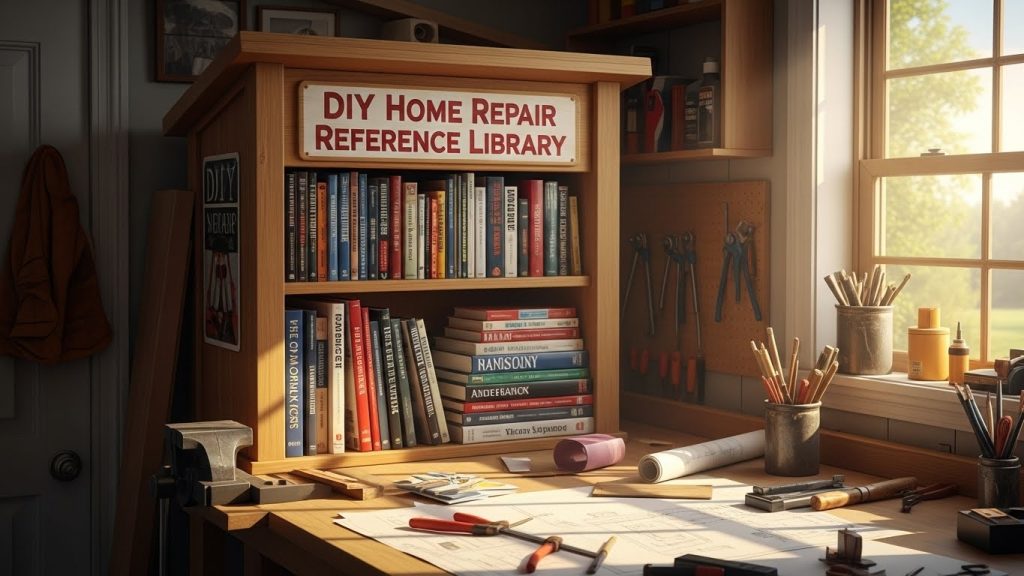
The foundation of any respectable DIY library starts with several core references that cover the breadth of home systems. “The Reader’s Digest Do-It-Yourself Guide to Preventing Costly Home Repairs” provides excellent preventative maintenance guidance, while “Ultimate Guide: Home Repair and Improvement” delivers comprehensive coverage across all major home systems. These cornerstone references should be supplemented with specialty guides based on your home’s specific needs and your personal interest areas. Look for publications with clear illustrations, troubleshooting flowcharts, and materials lists rather than just text descriptions. The best references also include information on when to call professionals and how to speak their language when you do need expert help.
1. Complete Home Repair Manuals
Comprehensive manuals serve as the backbone of your reference collection, offering broad coverage across all home systems in a single volume. The best options, like “How to Fix Anything: Essential Home Repairs Anyone Can Do,” provide both quick-reference troubleshooting guides and detailed procedural instructions. Look for manuals that include clear photography of real projects rather than just illustrations. Quality comprehensive references will also include decision trees to help diagnose problems accurately before you begin repairs. For beginners, manuals that categorize projects by skill level provide a natural progression path as your abilities develop. These all-in-one guides typically cost between $25-$45 but deliver exceptional value as your first reference acquisition. For more resources, check out the Livingston Library’s DIY home projects.
2. System-Specific Guides (Electrical, Plumbing, HVAC)
While comprehensive manuals provide excellent overview information, system-specific guides offer the depth needed for more complex projects. Electrical guides should include detailed information on circuit types, proper wire sizing, and safety protocols specific to electrical work. Plumbing references need to cover both supply and drain systems, with particular attention to common regional variations in code requirements. HVAC guides should address both maintenance procedures and diagnostic techniques that can save thousands in unnecessary replacements. These specialized guides typically include more detailed schematics, parts identification photos, and system-specific troubleshooting matrices than you’ll find in general references.
The value of system-specific guides becomes evident when tackling more complex repairs like replacing a circuit breaker or installing a new garbage disposal. The depth of information provides confidence through detailed step-by-step instructions and helps you understand not just the “how” but the “why” behind repair procedures. This deeper understanding transforms you from someone following directions into someone who truly comprehends your home’s systems—a distinction that pays dividends when diagnosing unusual problems that don’t perfectly match textbook examples.
3. Beginner-Friendly Tutorials
For those just starting their DIY journey, beginner-focused guides like “Beginner’s Guide to DIY & Home Repair” provide essential foundational knowledge in accessible language. These guides typically emphasize building a proper tool collection, understanding basic terminology, and mastering fundamental skills that apply across multiple project types. What distinguishes excellent beginner guides is their focus on confidence-building small wins before progressing to more complex projects. They typically include detailed tool usage instructions, extensive safety cautions, and simple projects designed to build transferable skills. Many also include “what could go wrong” sections that prepare novices for common mistakes and their solutions.
4. Code Compliance References
While less exciting than project guides, code compliance references protect both your safety and your home’s value. These references help ensure your DIY projects will pass inspection if you eventually sell your home and prevent insurance claim denials for non-compliant work. The most useful code references include plain-language explanations alongside actual code requirements, helping you understand the reasoning behind seemingly arbitrary rules. Look for guides specific to your municipality, as codes vary significantly between jurisdictions. Some excellent references include visual diagrams of compliant installations for common projects like deck construction, bathroom renovations, and electrical panel work.
Digital Resources That Transform DIY Projects
The evolution of digital resources has revolutionized how homeowners approach DIY repairs. No longer limited to static printed instructions, today’s digital guides offer interactive troubleshooting, video demonstrations of complex techniques, and community forums where experts weigh in on unusual problems. The Home Improvement Reference Center stands out as a premier digital resource, providing thousands of detailed articles from leading magazines alongside unique images and instructional videos covering everything from basic maintenance to advanced renovations. Unlike random internet searches, these curated digital collections ensure information accuracy and proper sequencing of repair steps.
Digital resources also excel at providing the most current information, which becomes critical when working with newer home systems or recently updated building codes. Many premium digital collections offer project calculators, interactive diagrams, and printable shopping lists that streamline project planning. The combination of multimedia learning approaches—text, images, and video—helps DIYers with different learning styles master techniques more efficiently than single-format resources. For complex projects, the ability to watch procedures before attempting them significantly reduces errors and increases confidence. For additional guidance, you can explore DIY home projects resources available online.
Home Improvement Reference Center Database
The Home Improvement Reference Center represents a gold standard among digital DIY resources. This comprehensive database contains thousands of articles from leading home improvement magazines and reference books, alongside unique images and videos not available elsewhere online. What distinguishes this resource is its rigorous fact-checking, systematic organization, and ability to search across multiple reputable sources simultaneously. Users can locate information through keyword searches, alphabetical project listings, or by browsing categories including electrical, plumbing, woodworking, and decorating. The database excels at presenting material for multiple skill levels, allowing homeowners to progressively build expertise.
Many public libraries offer free access to this premium resource through their digital collections, representing one of the most overlooked values of a library card. Rather than cobbling together potentially conflicting information from random websites, the Reference Center provides consistent, verified guidance from industry experts. Its interface allows users to save favorite articles, create project folders, and generate printable instructions to take to the worksite. For homeowners serious about building DIY skills, this single resource can replace dozens of individual books while providing the currency of regularly updated content.
E-books vs. Physical Books: What Works Better
The debate between digital and physical reference materials comes down to specific usage patterns rather than absolute superiority. E-books excel at searchability, allowing you to instantly locate specific topics across your entire collection with a single query. They also offer portability, giving you access to your complete reference library directly at the worksite via tablet or phone. Digital formats typically provide zoom capabilities for detailed illustrations and the ability to bookmark complex procedures across multiple sources. For homeowners with storage limitations, digital collections allow comprehensive coverage without dedicating physical space to bookshelves.
Physical books, however, maintain significant advantages in certain situations. They operate without power or internet connectivity—crucial during the electrical outages that often accompany home emergencies. Many DIYers find physical books easier to navigate between sections, using tactile memory to quickly relocate previously consulted information. Physical references also resist damage from work environments; a splashed page dries while a dropped tablet might not survive. The optimal approach for most homeowners combines both formats: physical books for fundamental, frequently-accessed information and comprehensive digital resources for specialized projects and deeper research.
Video Tutorials and Online Courses
Video demonstrations have transformed DIY education by showing rather than just telling how to complete complex procedures. The visual format clarifies subtle techniques that text struggles to convey—the exact angle to hold a tool, the sound that indicates a proper connection, or the texture change that signals when to stop sanding. Quality video tutorials typically show projects from multiple angles and include both the successful procedure and common mistakes to avoid. For visual learners especially, seeing a repair performed before attempting it dramatically increases success rates and confidence.
Top Rated Video Resources for DIY Home Repair
Platform: Home Improvement Reference Center
Best For: Verified, professional-quality instruction
Access: Free with most library cards
Standout Feature: Integration with written guides and illustrationsPlatform: This Old House
Best For: Detailed projects with professional commentary
Access: Subscription service with free previews
Standout Feature: Coverage of both modern and historical homesPlatform: See Jane Drill
Best For: Beginner-friendly demonstrations
Access: Free with premium options
Standout Feature: Step-by-step breakdowns for intimidating projects
Online courses take video learning further by organizing content into progressive learning paths rather than isolated project guides. These structured courses typically begin with foundational knowledge before advancing to specialized applications. Quality courses include downloadable plans, material lists, and often provide instructor feedback on your specific questions. Many include community forums where students can share their experiences and adaptations for different home situations. For homeowners planning significant renovation projects or those wanting to systematically build skills, the structured approach of courses often proves more effective than assembling knowledge from disconnected tutorials.
The effectiveness of video learning increases dramatically when combined with written materials rather than used in isolation. Written guides provide precise measurements, material specifications, and sequential steps to reference during the project, while videos demonstrate the physical techniques required. This multimedia approach accommodates different learning styles and provides reinforcement through multiple information channels. For complex projects especially, consulting both formats before beginning significantly reduces errors and increases efficiency.
Organizing Your DIY Home Repair Reference Library For Quick Access
Even the most comprehensive reference collection becomes worthless if you can’t find what you need when facing a leaking pipe at midnight. Effective organization systems transform random resources into a practical toolkit for home emergencies and planned projects alike. The best organization methods balance accessibility with protection, keeping materials both easy to retrieve and safe from workshop hazards. Most successful DIYers develop hybrid systems where frequently-used references remain permanently accessible while specialized guides are stored more carefully but with clear categorization.
Beyond physical organization, effective systems include cross-referencing mechanisms that connect related information across multiple sources. This might include custom indexes, color-coded tabs, or digital reference lists that point to specific pages across your collection. The time invested in thoughtful organization pays dividends during project execution, often saving hours of frustrated searching when you’re in the middle of a repair with water pooling on your floor.
Physical Storage Solutions
For physical references, consider workshop-friendly storage that protects materials while keeping them accessible during projects. Wall-mounted magazine files keep periodicals organized by topic and visible at a glance while occupying minimal workspace. Three-ring binders with clear plastic sheet protectors allow you to combine relevant pages from different sources into project-specific collections while protecting them from spills and dirty fingerprints. For comprehensive manuals, standing file boxes with dividers create accessible mini-libraries organized by system (electrical, plumbing, carpentry) or by project type (maintenance, repair, improvement).
Custom labels dramatically improve retrieval times, especially for infrequently used references. Consider topic-based labeling systems with color-coding that can be quickly scanned even in poor lighting. For homeowners with extensive collections, a simple database tracking which book contains specific information can prevent hours of fruitless searching across multiple volumes. Even a basic spreadsheet listing major topics and their locations within your collection can transform frustrating searches into efficient retrievals.
Digital Organization Systems
Digital references require their own organizational approach to prevent the “digital haystack” problem where information disappears into the void of unsearchable files. Cloud storage solutions with consistent naming conventions ensure your reference materials remain accessible from any device, including when you’re at the hardware store purchasing supplies. For downloaded resources, folder structures mirroring physical organization systems (by project type or home system) create intuitive navigation paths. Applications like Evernote or OneNote allow you to combine snippets from multiple sources, annotate with personal notes, and create searchable tags that surface relevant information instantly.
For video tutorials, consider creating playlists organized by skill level or project type rather than relying on chronological viewing history. Bookmark particularly useful timestamps within longer videos for quick reference to specific techniques. Many digital readers allow annotation and highlighting that can be searched later, effectively creating your personal index of critical information. When combined with consistent tagging systems, these digital organization methods often outperform physical references for rapid information retrieval.
Creating Custom Repair Guides For Your Home
Generic guides, no matter how comprehensive, can’t address the specific brands, models, and configurations in your particular home. Creating customized references for your property’s unique systems transforms general knowledge into precision tools. Start by collecting and digitizing manufacturer manuals for all appliances and systems, including model numbers, purchase dates, warranty information, and support contacts. Supplement these with photographs of your actual installations, particularly documenting areas that will be hidden behind walls or under floors after project completion. Add personalized notes on quirks specific to your home, like which circuit breaker controls which outlets despite confusing panel labels.
These custom references become invaluable during emergency repairs and when communicating with service providers. They also create a valuable record for future homeowners should you eventually sell the property. Many DIYers create digital folders for each room or system, combining manufacturer documentation with personal repair logs and photos taken during previous work. This approach creates an evolving knowledge base that grows more valuable with each project you complete.
Essential Magazines Every DIYer Should Subscribe To
While books and online resources provide depth, magazines offer currency—featuring new products, evolving techniques, and innovative solutions not yet incorporated into comprehensive guides. Quality home improvement magazines combine aspirational projects with practical skills development, seasonal maintenance reminders, and tool reviews based on actual testing. Their periodic arrival also helps maintain momentum and enthusiasm for developing your DIY capabilities through regular exposure to new ideas.
Beyond the information itself, many magazines include reader forums where experienced homeowners share adaptations and improvements to published project plans. These real-world modifications often address regional differences in materials availability, climate considerations, or code variations that general articles can’t cover comprehensively. For beginners especially, seeing how other homeowners have successfully completed similar projects builds confidence and provides practical warnings about common pitfalls.
Family Handyman: The Gold Standard
Among DIY publications, Family Handyman stands out for its practical focus on projects most homeowners actually need rather than aspirational renovations beyond typical skill levels. Its step-by-step photography, detailed materials lists, and realistic time estimates have earned it a reputation for reliability among both beginners and experienced DIYers. The magazine excels at presenting multiple solution options for common problems, typically including quick fixes alongside more permanent repairs depending on your available time and budget.
What truly distinguishes Family Handyman is its thorough testing of techniques before publication and its willingness to show mistakes and recovery strategies rather than just perfect execution. Regular features like “Handy Hints” provide innovative solutions to common frustrations using readily available materials. The publication balances approximately 60% repair/maintenance content with 40% improvement projects, making it particularly valuable for homeowners focused on practical skills development rather than just inspiration.
Consumer Reports For Product Testing
While not exclusively focused on home improvement, Consumer Reports provides invaluable guidance for tool and material selection based on rigorous independent testing. Their unbiased evaluations help DIYers avoid wasting money on ineffective products or unnecessarily expensive options that don’t deliver proportional quality improvements. The publication’s standardized testing methodology allows direct comparisons between competing products across multiple performance factors rather than just price points.
Beyond product recommendations, Consumer Reports offers valuable guidance on recognizing quality indicators when examining products in person. Their detailed explanations of testing methodologies help readers understand which factors actually matter for performance versus marketing hype that doesn’t translate to real-world advantages. For DIYers developing their tool collections over time, this knowledge prevents expensive mistakes and helps prioritize purchases that will deliver the greatest capability improvements for your specific project needs.
Free Library Resources Most Homeowners Miss
Public libraries have evolved far beyond book lending to become comprehensive DIY support centers, yet most homeowners overlook these valuable resources. The Home Improvement Reference Center database, available through many library systems, provides access to thousands of detailed articles and videos that would cost hundreds as individual publications. These premium resources can be accessed remotely with just a library card number, effectively putting a comprehensive repair encyclopedia at your fingertips without purchase costs.
Beyond digital collections, many libraries maintain specialized physical references that would be prohibitively expensive for individual purchase, including current building codes, architectural standards, and historical restoration guides. Some library systems even offer tool lending programs where members can borrow specialized equipment needed for infrequent projects, allowing you to access professional-grade tools without the expense of purchasing items you’ll rarely use.
Database Access Through Your Library Card
The digital resources accessible through library memberships represent one of the most overlooked values in DIY information. Premium services like the Home Improvement Reference Center provide comprehensive collections of articles, illustrations, and videos covering projects from basic maintenance to major renovations. Unlike free internet resources, these curated databases ensure information accuracy, proper technique demonstration, and safety emphasis. Most can be accessed 24/7 from home computers or mobile devices, providing immediate guidance during unexpected repair situations.
The search capabilities of these databases dramatically outperform general internet searches, allowing you to filter results by project complexity, required tools, estimated completion time, or skill level. Many include printable shopping lists, customizable project plans, and troubleshooting guides specific to common brands and models. For homeowners serious about building DIY capabilities, these database subscriptions would cost hundreds annually if purchased individually, yet come free with most library cards.
Special Collections and Workshop Materials
Many libraries maintain specialized collections that address regional construction requirements, local building code interpretations, and area-specific challenges like earthquake reinforcement or hurricane preparation. These resources often include large-format drawings, detailed specifications, and regional material guides that would be difficult to find through general references. Some library systems have developed partnerships with local building departments to ensure their collections include the most current code requirements and approval processes for common homeowner projects.
Beyond traditional publications, innovative libraries now offer access to specialized software including CAD programs, landscape design tools, and project estimation applications that would be prohibitively expensive for occasional use. These resources allow homeowners to create professional-quality plans for permit applications or contractor discussions. Some forward-thinking libraries even offer 3D printing services where DIYers can create custom parts or replacement components that are no longer commercially available for older homes.
Librarian-Led Resources For Home Repair
Many libraries have developed specialized resource guides specifically for home repair and improvement, curated by librarians with expertise in finding high-quality technical information. These guides typically organize resources by project type, skill level, and required tools, helping DIYers quickly locate the most relevant information for their specific needs. Some include comparative resource evaluations, highlighting which references excel for particular project types or skill levels. Librarians can also provide guidance on interpreting technical information, locating historical building techniques, and identifying the most authoritative sources for specialized topics.
Beyond passive collections, many libraries offer active programming including workshops on basic home maintenance, tool usage demonstrations, and project-specific clinics led by professionals. These events provide hands-on experience under expert guidance, allowing you to develop skills before tackling projects independently. Some libraries have created recording libraries of these sessions, building video collections that demonstrate locally relevant techniques addressing regional construction styles and common problems in area homes. For additional resources, you can explore DIY home projects at your local library.
- Workshop schedules focusing on seasonal maintenance needs
- Specialized clinics for historical home preservation techniques
- Tool demonstrations with safety emphasis
- Code compliance sessions led by local inspectors
- Material selection guidance for regional climate considerations
The expertise of reference librarians themselves represents an underutilized resource for complex research needs. These professionals specialize in information location and can often direct DIYers to obscure but valuable resources they might never discover independently. For unusual projects, historical restorations, or troubleshooting rare systems, consultation with reference librarians can save countless hours of fruitless searching and connect you with authoritative information sources.
Building Your Personal Home Systems Manual
Beyond general reference materials, creating documentation specific to your property transforms generic knowledge into precision tools for your exact needs. A comprehensive home systems manual becomes both maintenance guide and troubleshooting resource, capturing the unique characteristics of your property’s construction, equipment, and previous repairs. This personalized reference dramatically reduces diagnostic time during emergencies and provides essential continuity when different household members handle maintenance tasks. For future owners, this documentation becomes an invaluable inheritance that prevents knowledge loss during property transfers.
Developing this resource incrementally makes the task manageable, typically beginning with basic system documentation and expanding with each project you complete. Digital formats allow continual updates as systems change or new information becomes available. Cloud storage ensures this critical information remains accessible even when you’re away from home, allowing remote guidance for household members or service providers during emergencies.
- Home system specifications (electrical panel capacity, plumbing pipe materials)
- Equipment model numbers, purchase dates, and warranty information
- Service provider contacts organized by specialty
- Emergency shutdown procedures for all utility systems
- Maintenance history with dates, procedures, and materials used
For homes with smart systems or complex automation, this manual becomes particularly valuable by documenting network configurations, control sequences, and override procedures. This information often disappears when original installers are no longer available, potentially turning minor adjustments into major research projects without proper documentation.
Documenting Your Home’s Specific Features
Effective documentation begins with baseline information about your property’s core systems. For electrical systems, document panel configurations with labeled circuit maps confirming exactly which breakers control which areas—often different from panel labels. Photograph inside access panels before closing them to record exact wire routing, connection methods, and component brands for future reference. For plumbing, create simple diagrams showing pipe pathways through walls and under floors, with shutoff valve locations clearly marked for emergency access.
Equipment documentation should include model numbers, serial numbers, installation dates, and manufacturer contact information. Add links to online manuals or store digital copies directly in your documentation system. Photograph data plates on equipment before they become illegible through age or dirt accumulation. For components that will be hidden after installation, like in-wall valves or junction boxes, photographs with measurement references to visible landmarks help locate them years later without destructive searching.
For older homes, document non-standard features that differ from contemporary construction, particularly noting dimensions that don’t match current standards. Record ceiling heights, door widths, window sizes, and stairway dimensions to simplify future material ordering. This information becomes invaluable when sourcing replacement materials or planning renovations that must integrate with existing structures. For more resources on home projects, explore DIY home projects at Livingston Library.
Creating Maintenance Schedules
Preventative maintenance consistently proves more economical than emergency repairs, but requires systematic scheduling to prevent oversight. Develop calendar-based maintenance schedules for all major home systems, typically organizing tasks by season for weather-appropriate timing. Include detailed procedural descriptions rather than just task names, ensuring any household member can complete routine maintenance correctly. Link these procedures to specific pages in your reference collection where more detailed guidance can be found if needed.
Effective schedules include supply lists for consumable maintenance items like filters, lubricants, or cleaning solutions, ideally with specific product recommendations based on your equipment. Many homeowners include storage location information for specialized tools needed only during maintenance procedures. For complex systems like HVAC equipment, consider documenting normal operating parameters (temperatures, pressures, sound levels) to establish baselines for detecting performance deterioration before catastrophic failures occur.
Tracking Past Repairs For Future Reference
Detailed repair logs transform each project from an isolated event into an educational resource for future maintenance. Document not just what was done but why particular approaches were chosen, materials selected, and adaptations made for your specific situation. Include “before” and “after” photographs that capture conditions throughout the repair process, particularly documenting areas that will be concealed upon completion. These visual records become invaluable when similar issues arise or when different household members need to understand previous work.
Take Your DIY Knowledge To The Next Level
Building your DIY home repair reference library represents an investment that pays dividends both financially and through increased self-reliance. From comprehensive manuals to specialized system guides, from digital resources to custom home documentation, each component contributes to a knowledge foundation that transforms home ownership from a series of crisis responses into thoughtful stewardship. By leveraging free library resources, creating personalized references for your specific property, and systematically capturing maintenance knowledge, you develop capabilities that enhance both your home’s value and your confidence in managing it. For comprehensive guidance on building your DIY capabilities through properly organized information resources, explore the Home Improvement Reference Center’s extensive collection of detailed articles, unique images, and instructional videos covering everything from routine maintenance to major renovations.
Frequently Asked Questions About A DIY Home Repair Reference Library
Here are answers to the most common questions homeowners have about building effective DIY reference collections and maximizing their value for practical home maintenance and repair.
How much money can I really save with DIY home repairs?
The average homeowner saves between $1,500-$3,000 annually through DIY repairs, with some saving significantly more depending on home age and complexity. Service call fees alone typically start at $75-$150, with hourly rates ranging from $50-$150 depending on the trade, region, and timing. Weekend or emergency services often command premium rates 1.5-2x standard pricing. Beyond direct labor savings, DIY maintenance prevents costly emergency repairs by addressing issues before they escalate into major failures. Perhaps most significantly, developing diagnostic skills helps homeowners determine when professional services are truly needed versus when simpler, less expensive solutions might suffice. For more resources, check out DIY home projects at the library.
What’s the most important reference material to start with?
For most homeowners, a comprehensive home repair manual covering all major systems provides the best initial value. Look for references that balance breadth with practical detail, featuring clear illustrations, troubleshooting guides, and materials lists. The “Reader’s Digest Do-It-Yourself Guide to Preventing Costly Home Repairs” offers excellent preventative maintenance guidance, while “Ultimate Guide: Home Repair and Improvement” delivers comprehensive coverage across all major home systems. As your skills develop, supplement these foundation references with system-specific guides matching your home’s particular needs and your personal interest areas. Digital resources through your local library’s Home Improvement Reference Center provide exceptional depth without additional cost.
How do I know which repairs are safe to DIY versus calling a professional?
Safety considerations, legal requirements, and skill requirements should guide this critical decision. Quality reference materials typically include clear guidance about which projects require professional licensing, permit acquisition, or specialized equipment beyond typical homeowner tools. Generally, projects that involve main electrical panels, gas line modifications, structural alterations, or major plumbing reconfigurations present both safety and legal concerns best addressed by licensed professionals. Your personal comfort level with particular systems should also influence these decisions.
- Projects typically safe for DIY: faucet repairs, toilet mechanisms, light fixture replacements, drywall repairs, basic carpentry, paint/finish work
- Projects requiring careful consideration: water heater replacement, dishwasher installation, ceiling fan mounting, intermediate electrical work
- Projects generally requiring professionals: main panel work, gas appliance installation, load-bearing wall modifications, roof replacement
Many homeowners develop hybrid approaches where they perform the time-consuming preparation and finishing work while hiring professionals for critical technical components. This strategy often delivers significant savings while ensuring system integrity and code compliance for complex projects.
When evaluating your capabilities against project requirements, consider not just technical knowledge but also physical demands. Some repairs require significant strength, extended awkward positioning, or assistance for safe execution regardless of your knowledge level. Quality reference materials should address these practical considerations alongside technical instructions.
Where can I find specialized information for older homes?
Older homes present unique challenges requiring specialized references beyond standard guides. Historical renovation publications like “Old House Journal” provide invaluable guidance for properties with outdated systems or period-specific construction techniques. Many libraries maintain special collections focused on regional architectural styles and building methods from different eras. Professional organizations including the National Trust for Historic Preservation offer detailed technical briefs addressing specific historical construction elements and appropriate maintenance approaches.
For very old homes, consider investing in period-specific construction guides that explain techniques and materials no longer in common use. Understanding how these systems were originally designed to function often reveals simple, period-appropriate repair approaches rather than unnecessarily extensive modernization. Local historical societies frequently maintain archives of original construction documents, builder catalogs, and neighborhood development plans that provide insights into your specific property’s original specifications.
How often should I update my reference materials?
Building codes typically undergo major revisions every three years, with local amendments potentially occurring more frequently. Materials, techniques, and equipment evolve continuously, with significant advances occurring approximately every 5-7 years in most home systems. For safety-critical information, particularly electrical and structural guides, updates every 3-5 years align with code revision cycles and help ensure your projects meet current standards. For general repair techniques or historical restoration approaches, older references often remain valuable much longer, as fundamental principles change more slowly than specific product recommendations.
Consider developing a hybrid reference collection where code-related and technical safety information comes from frequently updated sources, while general techniques and conceptual understanding draws from more timeless resources. Digital subscriptions through library services often provide the most current information without requiring complete reference replacement. Many homeowners establish annual review habits where they check for significant code changes or safety updates in their most active project areas, particularly before beginning major renovation work.

Building your DIY home repair reference library is an evolving process rather than a one-time project. As your skills develop, your collection will naturally expand to include more specialized resources matching your particular interests and your home’s specific needs. This knowledge foundation not only saves money on routine repairs but transforms your relationship with your home from reactive emergency response to confident, proactive stewardship that preserves and enhances its value over time.
Imagine having the extra cash every month to fund your hobbies and DIY projects without guilt. The Ultimate Cash Savings Toolkit(containing DIY Home Improvement) isn’t just about saving pennies; it’s about reclaiming the funds you need to upgrade your entire lifestyle. Stop cutting back on joy and start cutting out waste.